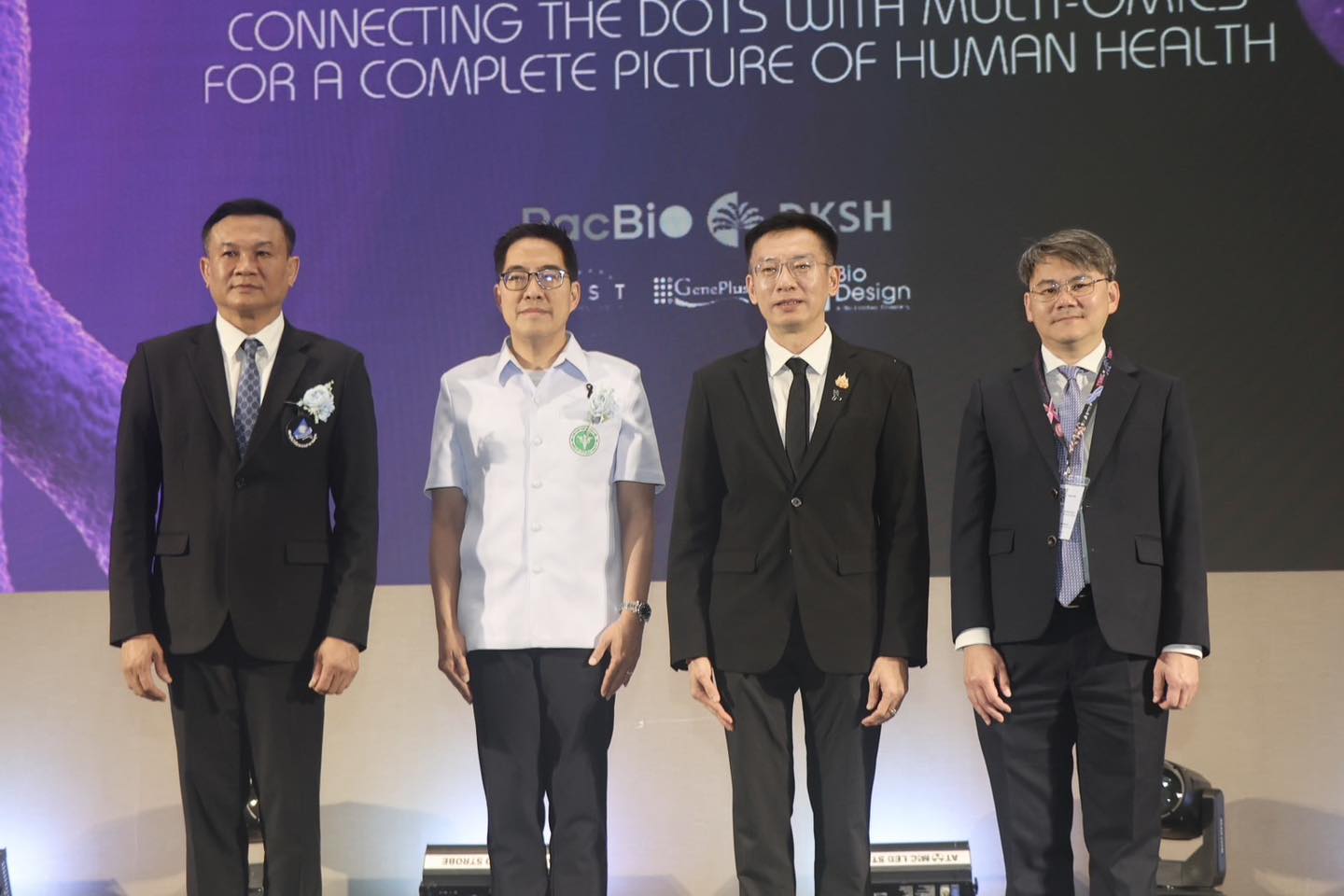
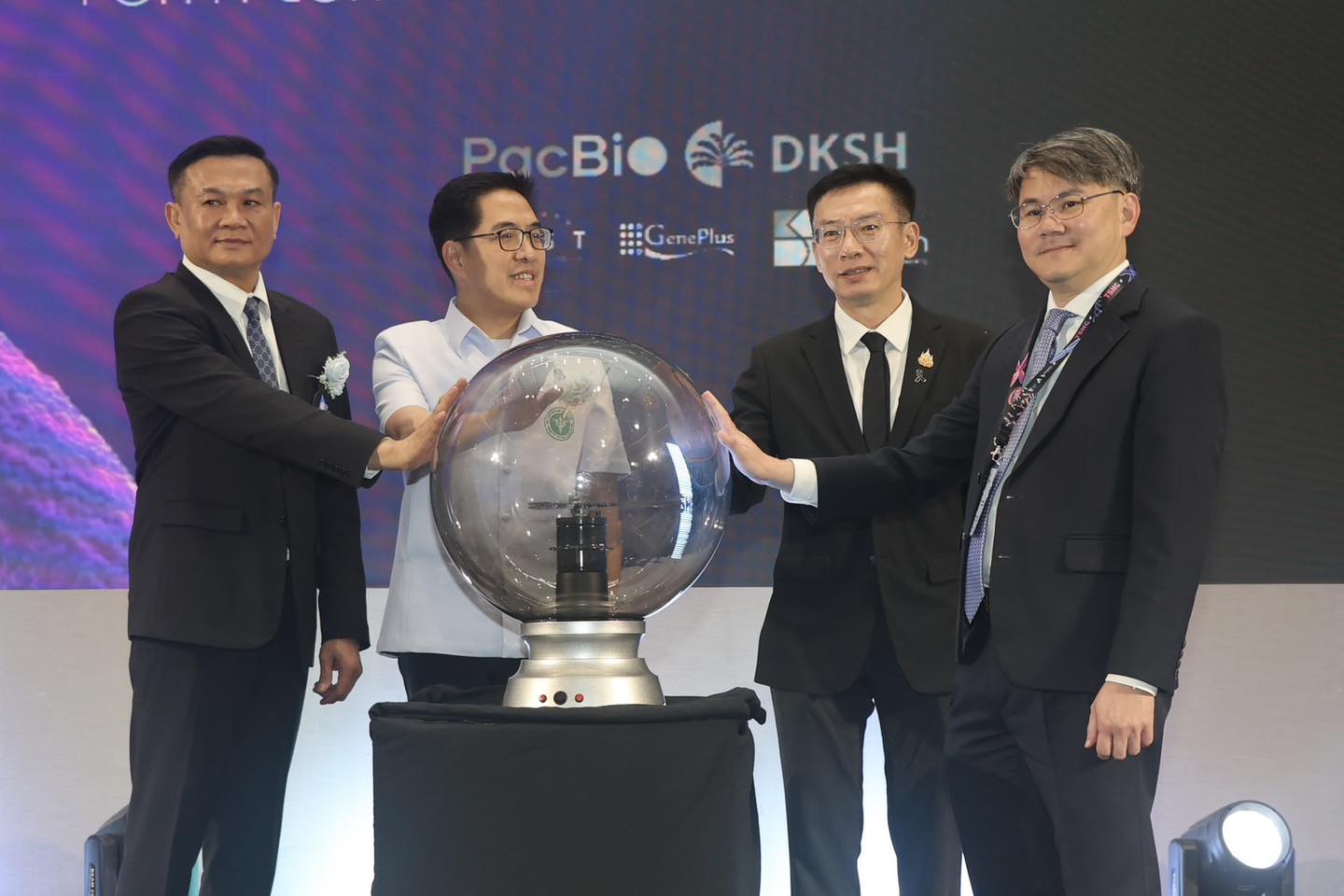
"Supachai" points out that 'genomics' is the future of the country
“Supachai” points out that ‘genomics’ is the future of the country, upgrading Thai medical services to be safe, modern, and accessible, and moving forward towards becoming a regional hub for precision medicine.
On May 6th, Prof. Dr. Supachai Pathumnakul, Permanent Secretary of the Ministry of Higher Education, Science, Research and Innovation (MHESI), presided over the opening ceremony of the 5th Annual Conference of the Thai Society of Anthropogenetics, under the theme “Genomics in Thailand and the Future: Linking Multiomics to a Full Understanding of Human Health.” Attendees included Dr. Sura Visetsak, Deputy Director of the Health Systems Research Institute (HSRI), Prof. Emeritus Dr. Sirirerk Songsiwilai, Chairman of the National Science, Research and Innovation Council (NSCR), Dr. Chakrit Eusuntornwat, President of the Thai Society of Anthropogenetics, and members of the society’s committee, at the Pullman King Power Hotel, Bangkok.
This event was held to promote collaboration and the exchange of knowledge and experience among researchers, students, medical scientists, and all relevant stakeholders. This will also drive Thailand towards becoming a leader in genomics medicine in the region, as well as elevate the quality of healthcare for Thais to meet international standards.
Prof. Dr. Supachai said that over the past several years, advances in human genetics and genome sequencing technology have brought about significant changes to the medical and public health fields worldwide, including Thailand. Patient genetic information has become an important tool for accurate and personalized diagnosis, prevention, and treatment of diseases, leading to a transformation of medical services in various fields, such as gene testing to prevent drug allergies, gene testing for cancer risk, genetic screening in newborns, and many other personalized medical services.
The government is committed to using innovations in genomics medicine to concretely improve the quality of life of the people through the implementation of the Thailand Genomics Integration Action Plan 2020-2024, by supporting the development of important infrastructure such as a genetic database of 50,000 Thais, a genetic material extraction center, and the development of more than 700 expert personnel, as well as creating a network of collaboration in genomics medical research and services nationwide. All of this forms a strong foundation for truly utilizing genetic information for beneficial purposes.
The Permanent Secretary of the Ministry of Higher Education, Science, Research and Innovation further stated that this period marks a crucial turning point in taking concrete action under the concept of “Genomics Thailand in Action.” We are moving forward in transforming accumulated knowledge into tangible and accessible medical services for the Thai people, such as including genetic testing for breast cancer risk and genetic testing to prevent severe drug reactions in the National Health Security System’s benefit package. This will help people receive modern, safe, and high-quality healthcare. In addition to health benefits, advances in the use of genomics technology have the potential to create a huge competitive advantage for the country.
“The development of knowledge, technology, and personnel in genomics will be a key driving force for Thailand to become a regional precision medicine hub, strengthening the integrated healthcare industry and increasing the country’s ability to attract investment, research, and the development of new technologies in the future, which will have a sustainable positive impact on the overall economy,” Prof. Dr. Supachai said.